
 Hand Pallet Trucks
 Special Pallet Trucks
 Galvanized and Inox Series
 Easy Lift Service
 Manual Stackers
 Electric Pallet Truck
 Electric Stackers
 Lift Table
 Drum Handling
 Others




12-Month Plan to Electrify a Manual Pallet Jack Fleet

TL;DR
- A complete manual-to-electric pallet truck fleet transition takes 9-15 months for most small warehouses, with 12 months being the median execution timeline.
- Four phases: assessment and baseline (months 1-3), pilot deployment and operator training (months 4-6), charging infrastructure setup (months 7-9), full rollout and optimization (months 10-12).
- Start with a 2-3 truck pilot covering the highest-usage application patterns (dock-to-stock, cross-warehouse transfer, order picking), not a single truck.
- Chargers belong at the natural end-of-shift parking locations of the trucks, not in a dedicated charging room -?the lower the friction, the higher the compliance.
- Operator training adds 2-4 hours beyond manual: battery management, control interface, braking behavior, pre-shift inspection. Skipping the training is the single most common cause of failed fleet transitions.
Buying an electric pallet truck is a procurement decision. Converting a manual fleet to electric is a 12-month operations project. The difference between operators who successfully make the transition and operators who buy three trucks and then stop is almost never about which truck they chose -?it is about whether they built the supporting infrastructure, training, and rollout plan that allow the trucks to actually displace manual jacks in daily use.
Staxx distributors see this gap in the field frequently. A customer places a five-truck order, the trucks arrive, two go into service and the other three sit in the corner of the dock because the operators do not trust the controls, the chargers were installed in the wrong location, or the trucks were not specified for the actual load profiles on the dock. Twelve months later, the customer is back to using manual jacks for 80% of work and the electric fleet is sitting partially idle. The five-truck investment is partially written off.
The 12-month plan below is the structure we recommend to customers who want to avoid that outcome. It is execution-focused rather than analysis-focused -?it assumes the economic case for electrification has already been made (see the warehouse TCO analysis for the financial logic). What it covers is the operational work that turns a capital purchase into a working fleet.
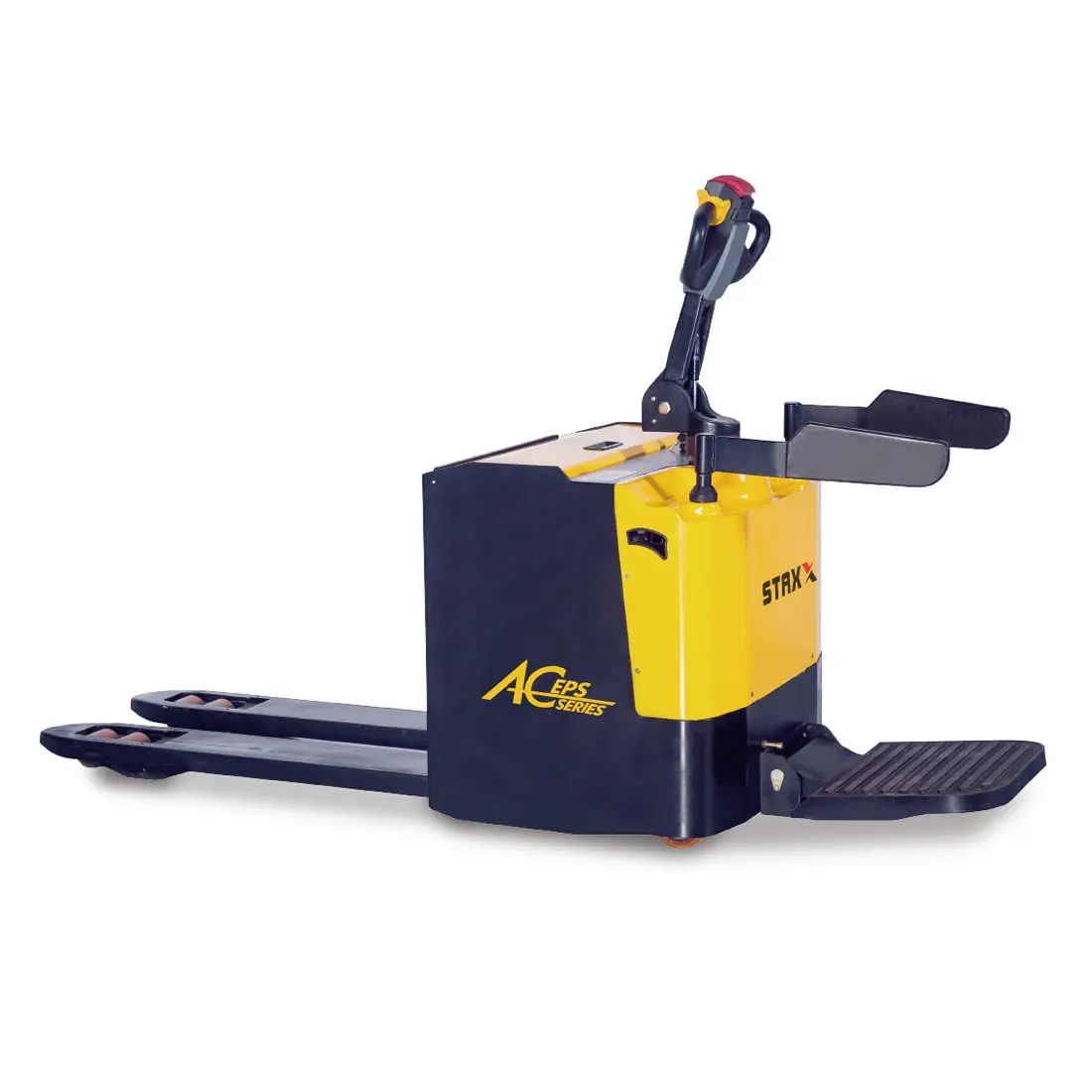
For context on the product category this plan is calibrated to, the electric pallet truck lineup spans the 1.5-1.8 ton capacity range that covers most small warehouse dock-to-stock operations. The specific WPT15-2 and WPT18 models are the typical target platform for fleet conversions in the small-warehouse segment. For the financial comparison that justifies the transition in the first place, the manual vs electric 5-year TCO breakdown walks through the operating cost and labor productivity comparison; this article assumes that decision has been made and focuses on the execution timeline.
The 12-Month Execution Roadmap
The plan below divides into four phases, each approximately three months. The first three phases are sequential. The fourth phase overlaps with the third in large fleets because the final rollout is parallel work with infrastructure completion.
Phase 1 - Assessment and Baseline (months 1-3). Fleet audit, application mapping, unit specification, vendor selection, financing. No trucks ordered yet.
Phase 2 - Pilot Deployment and Operator Training (months 4-6). Order and receive 2-3 pilot trucks, train the first cohort of operators, validate application fit, gather performance data. First operating review at end of month 6.
Phase 3 - Charging Infrastructure and Full Order (months 7-9). Charger installation complete for the full fleet, place the order for the remaining trucks, train the second cohort of operators. Trucks arrive end of phase 3.
Phase 4 - Full Rollout and Optimization (months 10-12). Deploy the full fleet, retire manual jacks per the rollout schedule, fine-tune operator assignments and charger locations based on pilot data. Final TCO measurement at end of month 12.
The phases assume a typical small-warehouse fleet of 6-12 trucks. Smaller fleets (3-5 trucks) can compress the timeline; larger fleets (20+) should extend it. The gating constraint is rarely capital - it is the time required to install electrical infrastructure and train operators without disrupting peak-season operations.
Phase 1: Assessment and Baseline (Months 1-3)
The first phase is purely analytical. The goal is to produce a data-driven specification for the trucks, chargers, and infrastructure before any purchase order is placed.
Fleet Audit
Document every manual Pallet Jack in the operation with these data points: load capacity, year of manufacture or purchase, current condition rating (excellent/good/fair/poor), hours of operation per day, typical load weight, primary application category (dock-to-stock, cross-warehouse transfer, order picking, truck loading, etc.), and operator assigned to each unit. The audit output is a spreadsheet with one row per manual jack and columns for each data point.
The audit identifies which manual jacks are good candidates for replacement and which should remain in service. High-usage manual jacks in the 2,000+ cycles per day range are the strongest candidates for replacement. Low-usage manual jacks that operate as backup or specialty units (e.g., for narrow-aisle applications) can remain in service indefinitely.
Application Mapping
Map each application category to the right electric truck specification. A dock-to-stock operation that runs 50 cycles per day on standard pallets needs a 1.5 ton truck with a 24V battery. A cross-warehouse transfer operation that runs 80 cycles per day with loads up to 2,000 kg needs a 1.8 ton truck with a higher-capacity battery. An order picking operation with frequent starts and stops needs a truck with proportional speed control rather than fixed-speed.
The mapping drives the truck count by model. A typical small warehouse might end up with 4 WPT15-2 trucks for dock-to-stock and order picking, and 2 WPT18 trucks for heavier cross-warehouse transfer.
TCO Reference
The financial case for electrification is documented separately. The 5-year TCO breakdown compares operating cost, labor productivity, injury reduction, and truck longevity for manual vs electric. That document is the input to Phase 1 capital approval; the execution plan below is what happens after the approval.
Phase 2: Pilot Deployment and Operator Training (Months 4-6)
The pilot phase is the most operationally critical period of the transition. The pilot data determines whether the full rollout proceeds as planned or requires re-specification.
Pilot Truck Selection
The pilot should be 2-3 trucks representing 15-25% of the planned electric fleet size. The trucks should cover the three highest-usage application patterns identified in the audit. Selecting pilot trucks for the highest-usage applications ensures that the performance data is generated on the workloads that will dominate the full fleet deployment.
A pilot under 2 trucks produces too little operational data to validate charger locations, operator training, and application fit. A pilot above 5 trucks creates training resource strain during the validation phase because each operator needs supervised practice time on the new equipment.
Operator Training
The training program is the single largest determinant of whether the fleet conversion succeeds or fails. Operators coming from manual pallet jacks need to develop new habits around four areas:
- Battery management: Operators must learn to monitor state of charge, plug the truck in at end of shift (not just when the battery is low), and recognize the signs of a depleted battery before the truck cuts out mid-shift.
- Control interface: The tiller arm with integrated speed controls, lift/lower buttons, horn, and emergency reverse is a different physical layout than the manual jack handle. Operators need hands-on practice to develop muscle memory.
- Braking behavior: Electric pallet trucks have different braking response than manual hydraulic, especially when carrying a load at speed. Operators must recalibrate their instinct for stopping distance.
- Pre-shift inspection: Manual jack operators rarely perform a structured pre-shift inspection. Electric trucks require it (battery level, tire condition, controller response, brake function, horn).
A typical operator needs 2-4 hours of initial training plus 1-2 supervised shifts before independent operation. Operators who skip the supervised practice phase typically develop unsafe habits that surface as incidents within the first 90 days. OSHA 1910.178 and the harmonized international standard ISO 3691-1 both require documented training, supervised practice, and operator evaluation before independent operation of powered industrial trucks on the warehouse floor.
Pilot Performance Review
At the end of month 6, the pilot data should answer four questions:
- Does the electric truck actually reduce operator fatigue and injury risk in our specific application?
- Does the operator training program produce operators who can safely operate the truck unsupervised?
- Do the temporary charger locations work, or do we need to relocate them for the full fleet?
- Are the application mapping decisions from Phase 1 correct, or do we need to re-specify?
If the answer to any question is unsatisfactory, the pilot extends by one month and the issues are corrected before the full order is placed. A clean pilot at month 6 triggers the full order in month 7.
Phase 3: Charging Infrastructure and Full Order (Months 7-9)
Phase 3 is the infrastructure phase. The full truck order is placed in month 7 based on the pilot data, but the chargers and electrical infrastructure are completed before the trucks arrive so the new units can go into service immediately on delivery.
Charger Placement Strategy
The single most important rule of charger placement: chargers belong at the natural end-of-shift parking locations of the trucks, not in a dedicated charging room. The lower the friction to plug the truck in at end of shift, the higher the charging compliance rate.
Typical placement locations include:
- Dock area adjacent to the truck staging zone (most common)
- End-aisle near receiving or shipping doors
- Dedicated parking bays with adjacent electrical outlets
- Cross-dock staging areas for trucks that operate there during the shift
Chargers should be on dedicated electrical circuits with sufficient amperage for the truck count. Lithium battery chargers can be wall-mounted at convenient heights for ergonomic plug-in. Lead-acid chargers require ventilation and floor space for the batteries if opportunity charging is not used.
Battery Technology Decision
The battery technology decision affects infrastructure requirements significantly:
- Lead-acid (flooded or AGM): Lower upfront cost, requires dedicated charging room with ventilation and acid spill containment, supports opportunity charging only with reduced cycle life. Best for operations with dedicated charging windows between shifts. Battery Council International standards govern the recycling and handling protocols for these battery types.
- Lithium-ion (LiFePO4): Higher upfront cost, charges at any standard outlet, opportunity charging without cycle life penalty, no ventilation requirements, no acid spill risk. Best for operations that want maximum flexibility in charging location and timing.
For most small warehouse fleet conversions, lithium-ion has become the default selection over the past three years. The total cost of ownership advantage of lithium (longer cycle life, lower energy consumption, no maintenance labor) typically offsets the higher upfront cost within 18-24 months of operation.
Order Placement and Delivery
Once the pilot performance review confirms the truck specification, the full fleet order is placed in month 7. Standard lead time for the WPT15-2 and WPT18 series is 30-45 days for in-stock configurations and 60-90 days for customized configurations. The full fleet typically arrives in months 9-10, overlapping with the end of infrastructure setup.
Phase 4: Full Rollout and Optimization (Months 10-12)
The full rollout replaces the manual jacks on a schedule that aligns with the new trucks coming into service.
Rollout Sequence
The rollout proceeds in the same application priority order as the pilot, starting with the highest-usage applications. Manual jacks assigned to the highest-usage applications are the first to be retired because those are the applications where the electric trucks deliver the largest labor and safety benefit.
A typical rollout sequence:
- Week 1: Deploy first wave of trucks (typically 30-40% of fleet) to highest-usage applications. Train remaining operators on the new trucks.
- Week 4: Deploy second wave of trucks (another 30-40% of fleet). Replace more manual jacks as trucks become available.
- Week 8: Deploy final wave of trucks. Remaining manual jacks either retired or reassigned to backup/specialty roles.
- Week 12: All operators fully transitioned. All electric trucks in active service. Manual jacks either sold or retained as backup.
Final Performance Validation
At the end of month 12, the operation should measure against four success metrics:
- Labor hours per pallet moved: Should decrease by 30-40% compared to manual baseline. This is the productivity gain the TCO analysis predicted.
- Operator injury incidents: Should decrease significantly in the back, shoulder, and wrist incident categories that dominate manual jack injury statistics.
- Equipment uptime: Electric trucks should achieve 95%+ uptime in steady-state operation. Charging discipline is the main variable.
- Battery cost per shift: Should be stable month over month. Rising cost indicates operator charging discipline problems or aging batteries.
If the metrics do not meet the targets, the issue is almost always training or charging discipline, not the trucks. Re-training operators and re-emphasizing the end-of-shift charging routine typically resolves performance gaps within 30-60 days.
The Common Mistakes That Blow the Timeline
Across hundreds of fleet transitions, the same handful of mistakes come up repeatedly. These are the issues that extend a 12-month plan into an 18- or 24-month plan.
Skipping the pilot. Operators who skip the pilot phase and order the full fleet immediately often end up with a partial fleet in service because the trucks were not specified correctly for the actual applications. The 3 months saved on the pilot phase is lost in the 6-12 months spent re-specifying after deployment.
Installing chargers in the wrong location. The single most common infrastructure mistake. Chargers installed in a dedicated charging room rather than at the end-of-shift parking location see charging compliance rates below 50%. Operators plug the truck in at the end of the shift only if it is convenient.
Skimping on operator training. Operators who skip the supervised practice phase develop unsafe habits. The safety incidents that follow trigger management attention, formal retraining, and 3-6 months of additional program management overhead.
Underestimating electrical infrastructure cost. The charger unit cost is the visible line item. The electrical circuit installation (panel capacity, conduit, breakers, dedicated drops) is often 2-3x the charger cost and is frequently not included in the initial budget. Plan for the full infrastructure cost at the Phase 3 capital approval.
Retiring manual jacks too early or too late. Retiring manual jacks before operators are comfortable with the electric trucks creates pressure to revert to manual for difficult applications, undermining the conversion. Retiring manual jacks too late leaves the operator pool uncertain about which equipment to use for which job.
Charging Infrastructure Planning in Detail
The charging infrastructure work in Phase 3 typically requires coordination with a licensed electrical contractor. The scope of work includes:
- Electrical panel assessment: Verify the existing panel has capacity for the additional charger circuits. Older facilities often require a panel upgrade before charger installation.
- Dedicated circuit installation: One dedicated 20A or 30A circuit per charger, depending on charger type and truck battery capacity.
- Conduit and outlet placement: Outlets positioned at the truck parking location, ideally at a height that allows ergonomic plug-in without bending.
- Ventilation requirements: Lead-acid charging rooms require ventilation per OSHA and NFPA standards. Lithium-ion does not.
- Spill containment: Lead-acid batteries require acid spill containment in the charging area.
For a 6-truck fleet on lithium batteries, the infrastructure cost typically ranges from a few hundred to a couple thousand dollars per truck depending on the panel upgrade requirements. For lead-acid, the cost is significantly higher due to the charging room requirements. The NFPA 505 standard covers fire safety for industrial truck operations and is the typical reference for charging room layout, ventilation, and spill containment requirements.
Operator Training That Actually Works
The training program is the variable that determines whether the transition succeeds. A training program that covers the regulatory minimum (formal instruction, supervised practice, written test) is the baseline. A training program that produces operators who actually prefer the electric trucks to manual ones goes further.
Three training tactics that work:
- Train the trainer first: Identify 2-3 senior operators per shift as certified trainers. Have them participate in the vendor's train-the-trainer program before the rest of the operator pool.
- Pair new operators with experienced operators: For the first 30 days after a new truck deployment, assign the truck to an operator who has at least 30 days of experience on the electric model. New operators learn faster when shadowing an experienced user than when reading a manual.
- Track and publish performance metrics: When operators see that the electric trucks reduce labor hours per pallet moved by 30-40%, they become advocates for the new equipment. When they only hear about it from management, they remain skeptical.
FAQ
How long does it take to electrify a manual pallet jack fleet?
A complete manual-to-electric pallet truck fleet transition takes 9-15 months for most small warehouse operations, with 12 months being the median. Smaller fleets of 3-5 trucks can compress to 6-9 months. Larger fleets of 20+ trucks should plan 15-18 months for the rollout phase.
What is the first step in converting from manual to electric pallet trucks?
The first step is a comprehensive fleet audit documenting every manual pallet jack in service - load capacities, age, hours of operation, application patterns, and maintenance history. The audit identifies which trucks are best candidates for replacement versus which can remain in service.
How many electric pallet trucks do I need to start the transition?
Most operations should start with a pilot of 2-3 electric pallet trucks representing 15-25% of the planned electric fleet size. The pilot unit count should be large enough to cover the three highest-usage application patterns and small enough to manage operator feedback without overwhelming training resources.
Where should pallet truck chargers be installed?
Pallet truck chargers should be installed at the natural parking locations of the trucks at end of shift, not in a separate dedicated charging room. Typical locations include the dock area near the truck staging zone, end-aisle near receiving or shipping doors, and dedicated parking bays with adjacent electrical outlets.
What training do operators need on electric pallet trucks that they did not need on manual?
Electric pallet truck training adds four topic areas beyond manual operation: battery management, control interface, braking behavior, and pre-shift inspection. A typical operator needs 2-4 hours of initial training plus 1-2 supervised shifts before independent operation.
Closing Note From the Marketing Desk
Buying the right electric pallet trucks is the procurement decision. Making the trucks actually replace manual jacks in daily warehouse operation is the operations project. The 12-month plan above is the operations project, structured to produce measurable results at the end of month 12 against the productivity, safety, and uptime targets that justified the investment in the first place.
Operators who follow the plan end the year with a fleet that delivers the labor savings and injury reduction the financial analysis promised. Operators who skip the operational work and focus only on the equipment purchase end the year with a partial fleet, uncertain operators, and an investment that does not deliver against expectations.
For buyers evaluating the WPT15-2 or WPT18 truck specification as part of a fleet transition, or browsing the broader electric pallet truck lineup across capacity classes, the 12-month plan above should be reviewed alongside the truck specifications before purchase. The plan that is built before the purchase runs smoothly; the plan that is improvised after the purchase runs late.