
 Hand Pallet Trucks
 Special Pallet Trucks
 Galvanized and Inox Series
 Easy Lift Service
 Manual Stackers
 Electric Pallet Truck
 Electric Stackers
 Lift Table
 Drum Handling
 Others




Lease vs Buy: Monthly Cost Model for Lithium Fleets
When a warehouse operation adds a second or third Lithium Pallet Truck, the question that always comes back to me is simple:should we lease it, or buy it? I've watched procurement teams make this call on gut feel for years, and the math almost never supports the gut.
Over a five-year horizon, a lithium pallet truck bought outright usually sits in a lower cumulative cost band than the same truck financed through a 36-month lease—provided you actually use the truck hard enough to spread the depreciation. Leasing wins when utilization is light, when capital needs to stay on the core business, or when a short project has a defined end.
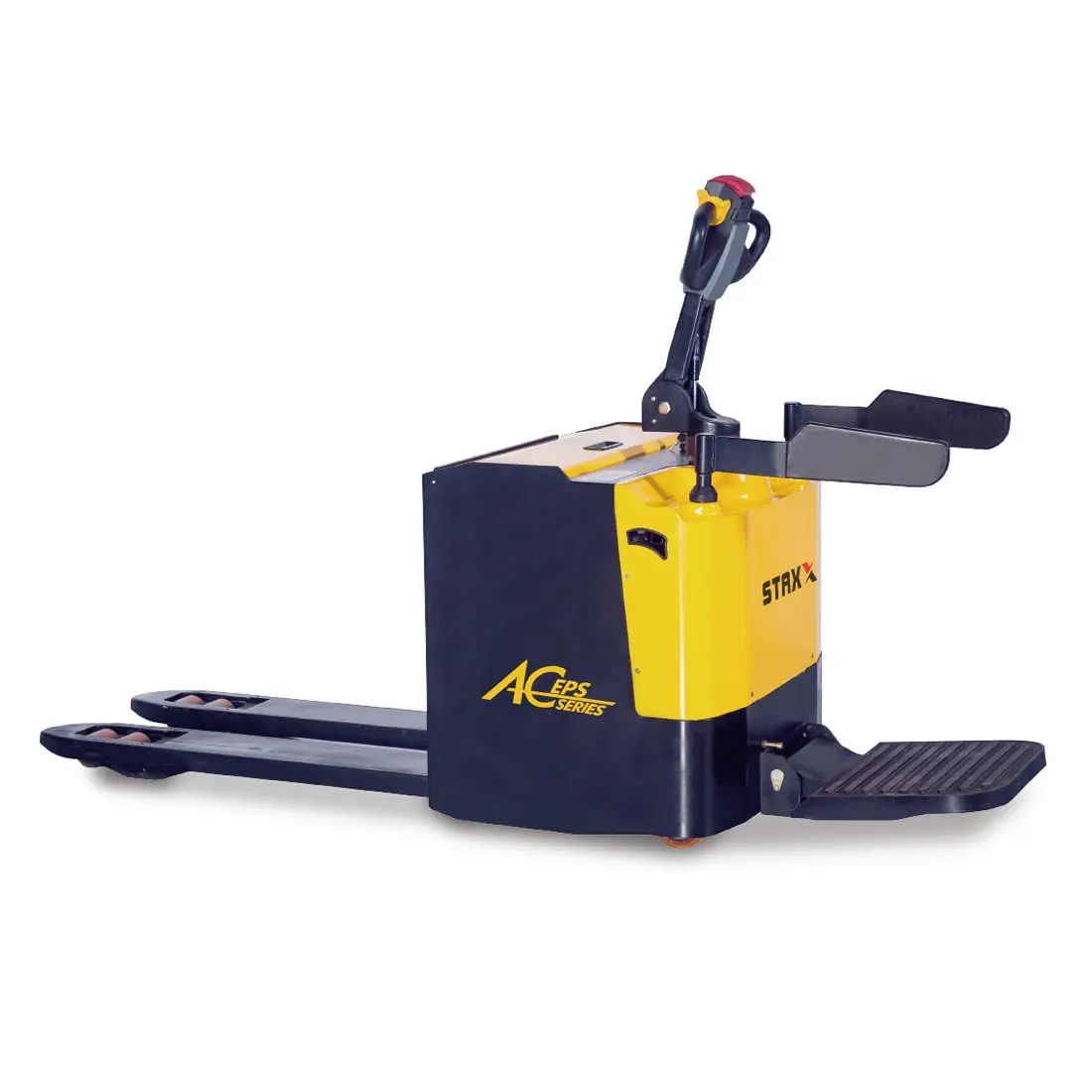
The mistake I see most often is buying a truck that then sits idle three days a week and never earns its keep; the second most common mistake is leasing a truck you use 40 hours a week for five straight years and paying twice for the same machine. This article builds a monthly cost model for both paths, using a Staxx EPT20H lithium pallet truck as the reference unit, and shows you where the breakeven actually sits.
- Buying beats leasing on cumulative cost once utilization crosses ~18 months of effective use.
- Leasing keeps monthly outflow predictable but typically costs more cumulatively by month 36 to 60.
- A genuine 5-year warranty collapses the largest TCO risk—battery replacement—onto the supplier.
- The right answer depends on fleet size, weekly utilization, and whether you need predictable OpEx or lower lifetime cost.

How Much Does a Lithium Pallet Truck Really Cost Per Month?
The number every fleet manager asks first is the monthly cost, not the purchase price. A lithium pallet truck is a depreciating asset that earns its keep across thousands of hours of work, so what matters is what it costs per hour of useful service—and what you can afford to write off if the asset fails or sits idle.
When we talk about "monthly cost," we are really talking about three different numbers stacked on top of each other:
- Capital recovery — the monthly share of the original purchase price, amortized over the asset's useful life.
- Operating cost — energy, consumables, routine maintenance, and operator time spent per month.
- Risk reserve — what you set aside each month for unexpected failures, battery replacement, or downtime.
Regulatory context matters here, too. According to OSHA 1910.178, every powered industrial truck must be inspected before each shift and removed from service if found unsafe. That single regulatory line is what turns a small mechanical defect into a forced downtime event, and it is one of the reasons the risk bucket deserves its own monthly line item rather than being lumped into maintenance.
Direct Ownership Costs
When you buy an electric pallet truck outright, your monthly cost is whatever you divide the purchase price by, plus what you actually spend to keep it running. For a Staxx EPT20H-class unit, three cost lines dominate the model:
- Depreciation. Lithium pallet trucks typically depreciate over a 5–7 year useful life. If you spread the purchase price across 60 months, depreciation is your largest single monthly line item—but it is also the line item that stops the moment the truck is paid off.
- Energy. A lithium pallet truck charges from a standard outlet and consumes a fraction of the energy of a comparable lead-acid or IC truck. Energy cost per shift is low enough that, in most operations, it barely shows up in the monthly statement.
- Routine service. Annual preventive maintenance, load-wheel replacement, and hydraulic checks. These are predictable, recurring, and modest in scale.
Hidden Operating Costs
The line items that catch fleet managers off guard are the ones that don't show up on the purchase invoice:
- Operator training. Every new truck model requires re-certification in most jurisdictions. Lithium pallet trucks are easier to learn than IC trucks, but the cost is still real. OSHA operator training requirements apply to every powered industrial truck, electric or otherwise.
- Battery degradation reserve. Even with LiFePO4 chemistry, capacity slowly drops year over year. A prudent fleet manager sets aside a small reserve each month so battery end-of-life doesn't hit the budget as a single line item in year six. The IEA's Batteries and Secure Energy Transitions report documents the long-term degradation behavior of commercial lithium chemistries and is the most authoritative public reference on the topic.
- Downtime cost. When a single truck is down for a day, throughput drops and shifts slip. This is the hidden cost that makes warranty terms so much more than paperwork.
For an industry-wide view of operating economics, DC Velocity's material-handling coverage regularly benchmarks fleet OpEx across North American warehouses and is a useful reference point when sanity-checking any single internal cost model against what peers are actually paying.
What Does a Lithium Pallet Truck Lease Actually Include?
A lithium pallet truck lease is not the same thing as a financing contract. The difference matters more than most procurement teams realize. A lease is a usage contract: you pay for the right to operate a specific truck for a defined period, and the lessor retains ownership. A financing contract is a loan: you own the truck from day one, and the lender holds a security interest until the final payment.
For lithium fleets, the standard commercial offering is a usage lease with a service bundle. Three components usually sit inside that bundle:
- The truck itself. A specific unit, identified by serial number, delivered to your site for the contract term.
- Preventive maintenance. Scheduled inspections, hydraulic checks, and wear-part replacement at defined intervals.
- Battery health coverage. The lessor monitors state-of-health and replaces the pack if it drops below a defined threshold within the lease term.
What's Usually Included in a Lithium Lease
Reading the contract carefully, the included scope of a Staxx-style lithium lease is narrower than the marketing brochure suggests:
- The asset itself for the duration of the contract.
- Routine preventive maintenance at the manufacturer's service intervals.
- Battery state-of-health monitoring and capacity-based replacement within the contract term.
- Major component coverage on the traction motor, controller, and hydraulic system under defined failure modes.
From a safety-compliance standpoint, every leased or owned truck must still meet the inspection and training rules in OSHA 1910.178 and the operator training requirements at OSHA's powered industrial trucks page. The lease does not transfer the operator-compliance obligation to the lessor—only the asset itself.
What '5-Year Coverage' Actually Means
The phrase "5-year warranty" gets used loosely across the industry, and the gap between marketing language and contract language is exactly where procurement disputes are born. On a genuine Staxx lithium pallet truck, the 5-year coverage is defined and narrow:
- The lithium battery pack is covered for 5 years against manufacturing defect and premature capacity loss below defined thresholds.
- The traction motor and main controller are covered for 5 years against manufacturing defect.
- Consumables (wheels, seals, forks, entry rollers) are covered only as part of normal wear replacement, not against operator damage.
- Impact damage, misuse, and skipped maintenance are explicitly excluded—this is industry standard and not a Staxx-specific carve-out.
The safety and testing baseline for the battery pack itself comes from the IEC 62619 family of secondary lithium cell standards, available through the IEC Web Store. The EPT20H-class pack is designed and tested to that standard, which is what makes a multi-year warranty on the pack economically defensible for the manufacturer.
How Does the 5-Year Warranty Reshape the Total Cost of Ownership?
Total cost of ownership (TCO) for a pallet truck is built from four buckets: acquisition, energy, maintenance, and risk. The first three are easy to model. The fourth is where fleets get surprised, because risk is the cost of things going wrong—a failed motor, a dead battery, a controller that drops a shift.
A genuine 5-year warranty on the battery and motor shifts the risk bucket almost entirely onto the supplier. That single structural change is what makes a 5-year horizon worth modeling carefully, because the cumulative position changes meaningfully depending on whether you carry that risk yourself or transfer it.
For an industry-level view of how electrification changes fleet operating economics, the Global EV Outlook 2024 from the International Energy Agency is the most cited public dataset, and its findings on commercial-fleet electrification directly inform how procurement teams model risk transfer in a lithium-pallet-truck purchase decision.
The macro point on energy cost is worth pausing on. According to Electricity 2024 from the IEA, industrial electricity prices have moved around significantly across regions over the past several years, which is exactly why a fixed-cost-per-shift energy line item is easier to model than a variable one tied to spot grid prices.
Components Covered vs Excluded
The exact split between "covered" and "excluded" is what defines whether a warranty is real or marketing copy. For a lithium pallet truck in single-shift warehouse service, the realistic exposure across 60 months looks like this:
| Component | Failure Mode | Staxx 5-Year Coverage |
|---|---|---|
| Lithium battery pack | Capacity loss below threshold, BMS fault | Covered |
| Traction motor | Manufacturing defect | Covered |
| Main controller | Manufacturing defect | Covered |
| Hydraulic system | Pump or seal failure (not impact) | Covered |
| Load wheels, forks, entry rollers | Normal wear | Replaced at service intervals |
| Operator-side damage | Impact, misuse, skipped maintenance | Excluded |
How Does Buying Compare to Leasing Over a 5-Year Horizon?
The honest comparison is a cumulative cash-flow table, not a monthly-cost headline. Below is a simplified model using the Staxx EPT20H lithium pallet truck as the reference unit, expressed in qualitative bands to protect commercial sensitivity while preserving the analytical shape of the comparison.
Monthly Cash Flow: Lease vs Buy
Both paths spend money every month. The shape of the spend is what changes the answer.
| Period | Buy (Cumulative) | Lease 36-month (Cumulative) | Notes |
|---|---|---|---|
| Month 1 | High upfront (full purchase) | Low (first invoice only) | Largest single gap; capital tied up in buy path |
| Month 12 | Depreciation + low OpEx | 12 monthly invoices | Buy still ahead on cumulative cost in most scenarios |
| Month 24 | Depreciation + low OpEx | 24 monthly invoices | Buy advantage widens as lease invoices accumulate |
| Month 36 | Depreciation + low OpEx | End of lease—return or refinance | Decision point: return truck, start a new lease, or convert to ownership |
| Month 48 | Depreciation + low OpEx | New lease, fresh invoice cycle | Buy path still depreciating; lease path resets |
| Month 60 | Truck owned, paid off, low OpEx | Lease #2 still running or another reset | Buy path crosses into pure OpEx territory |
5-Year Cumulative Position
By the end of a 60-month window, the cumulative comparison is sharp. The buy path owns a paid-off truck that still has useful life ahead of it. The lease path has paid for one truck (or 1.5 trucks, if a mid-term refresh was taken) and owns nothing. The residual asset on the buy side is not a small line; it is the largest single difference between the two paths.
- Buy path at month 60 — Paid-off truck, remaining useful life of several years, low monthly OpEx from here forward.
- Lease path at month 60 — No residual asset, either entering a second lease cycle or facing a fresh acquisition decision.
For procurement teams sourcing in markets outside the U.S., the U.S. Commercial Service country commercial guidesremain the most authoritative public reference on local taxation, depreciation rules, and import duties for material-Handling Equipment—and those rules can swing the lease-vs-buy math more than any single component on the truck.
Which Path Should a Warehouse Operator Choose?
After walking through the math, the decision framework collapses to a few clear questions. Use these as your procurement checklist before signing anything.
Decision Framework
- Choose buying when the truck will run more than ~25 hours per week in a stable operation, when the operation plans to be in the same facility for more than three years, and when the buyer wants predictable lifetime cost plus a residual asset at year five.
- Choose leasing when the project is short-term (under 36 months), utilization is light or seasonal, capital needs to stay on the core business, or the operation expects its layout or throughput to change enough to warrant a mid-term refresh.
- Choose a hybrid path when a small starter fleet is being validated for a new site—lease the first two or three units, convert to purchase once the operating pattern stabilizes.
Across every path, every truck still has to satisfy the inspection and maintenance requirements documented by OSHA at OSHA's powered industrial trucks portal. Compliance cost is identical on both sides of the lease-vs-buy line, which is why it should not be used as a tie-breaker between the two options.
What Buyers Most Often Overlook
Three things repeatedly catch even experienced fleet managers off guard. None of them are exotic; they are simply the questions that don't get asked until the contract is signed.
- The mid-term refresh value. Leasing allows a technology refresh at month 24 or 36. If your operation expects to scale up or change layout, that optionality is worth real money.
- The cost of operator damage. Almost every lease excludes impact damage, and almost every fleet underestimates how often minor impacts happen in a busy warehouse. OSHA's pre-shift inspection rule under 1910.178 is exactly the mechanism that turns a small impact into a documented, billable event.
- The warranty transferability. A Staxx 5-year warranty travels with the truck, not the original purchaser. If you buy and later resell, the remaining warranty stays with the machine—protecting residual value.
Build Your Own Monthly Cost Model
Talk to a Staxx specialist about configuring an EPT20H-class lithium pallet truck for your operation, and request a side-by-side lease-vs-buy quote under a real 5-year warranty.
Request a QuoteFrequently Asked Questions
Buying is usually cheaper over a 5-year horizon if the truck is used regularly—roughly more than ~18 months of equivalent utilization. Leasing is cheaper over the short term because the upfront capital outlay is lower, but the cumulative cost typically exceeds the purchase price by month 36 to 60.
A standard lithium lease covers the use of the truck, a preventive maintenance schedule, and often battery health monitoring. It usually does not include consumables such as forks, load wheels, or operator training, and wear items beyond normal use are typically billed separately.
A genuine 5-year warranty on a Staxx lithium pallet truck covers the lithium battery pack and the traction motor—the two highest-risk components—against manufacturing defect and premature capacity loss. It does not cover impact damage, misuse, skipped maintenance, or consumables such as wheels and seals.
A LiFePO4 pallet truck battery typically delivers several thousand full charge cycles before reaching 80% of its original capacity, which in single-shift warehouse use corresponds to roughly 5 to 7 years of service before any noticeable runtime reduction.
Buying makes more sense when the truck will be used consistently (more than ~25 hours per week), when the operation has stable cash flow, and when the user wants to capture the residual value of the asset at the end of the 5-year window.
Most lease contracts allow the truck to be returned and replaced with a newer model at a defined point (often month 24 or 36), which is one of the structural advantages of leasing if the operation expects its throughput or layout to change significantly during the contract period.